You’re Allowed to Grieve the Life You Thought You’d Have
Some grief has no funeral.
No one brings a casserole. No one sends flowers. No one sits beside you and says, “Take all the time you need.”
Because technically, you haven’t lost anything.
You never had the spouse. The children. The anniversary trips. The house filled with family traditions. The person beside you at church.
And yet somewhere along the way, you pictured that life.
 Maybe you expected it by 28.
Then 32.
Then 37.
And now you are watching younger people announce engagements while quietly trying to understand what happened to the future you thought would be yours.
You love God.
You are grateful.
You are serving.
And you are grieving.
You are allowed to say that.
But there is something else you need to know:
Your grief may be real without your singleness being evidence that your life is incomplete.
That distinction changes everything.
Some Grief Has No Funeral
Christian singles often receive one of two messages.
The first says, “Just trust God. Your person is coming.”
The second says, “You need to be content with Jesus.”
Neither necessarily addresses what is actually happening.
Sometimes you are mourning.
Not because you hate your life.
Not because Jesus is insufficient.
But because there is a life you genuinely wanted that has not happened.
Scripture is surprisingly comfortable with that kind of pain.
Consider Hannah.
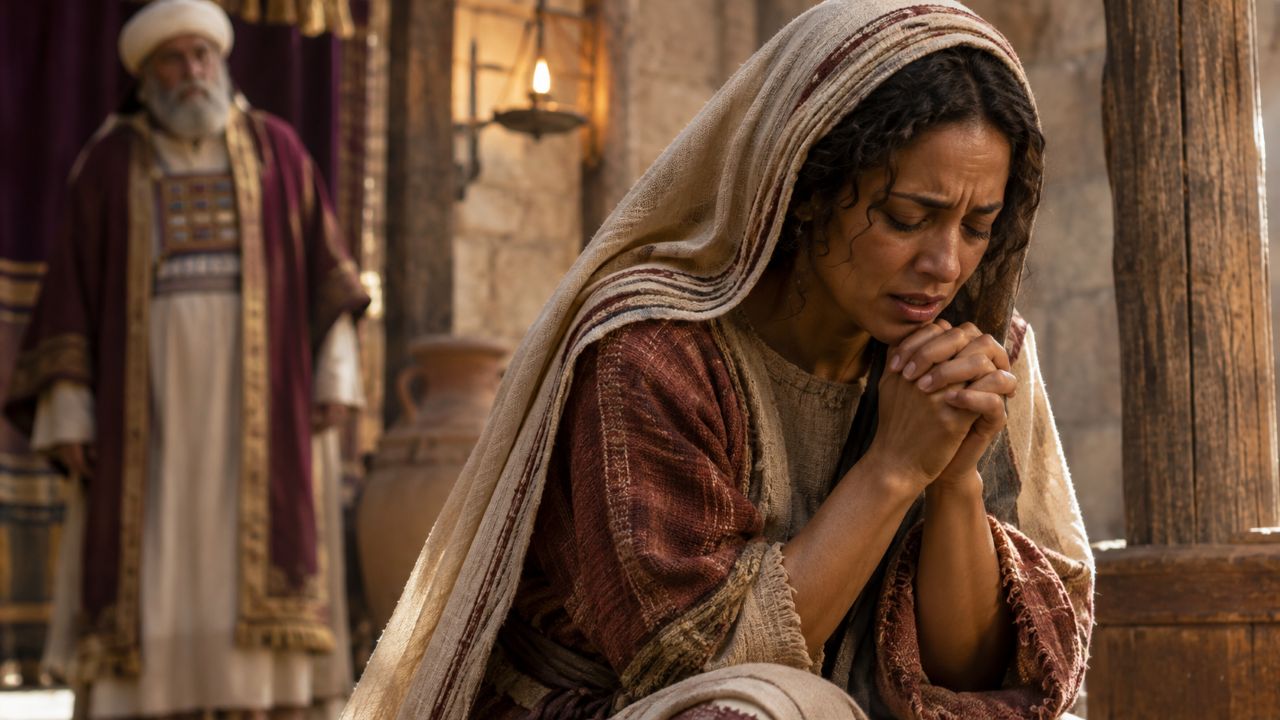 Hannah was not single. Her grief concerned childlessness, so we should not turn her story into an allegory for singleness. But her experience reveals something important about how Scripture treats an unfulfilled longing.
First Samuel chapter 1 describes Hannah as being in deep anguish and weeping bitterly. Verse 10 uses language that can be rendered “bitter of soul”—marat nephesh. Later Hannah tells Eli that she is deeply troubled and has been pouring out her soul before the Lord because of her anguish and grief. (The Complete Word Study Dictionary: Old Testament)
She is so visibly distressed that Eli initially mistakes her for being drunk.
And when he learns what is actually happening?
He does not lecture her about gratitude.
He does not accuse her of making motherhood an idol.
He sends her away in peace and blesses her.
The Bible does not shame Hannah for wanting something deeply enough to grieve its absence.
Neither should we.
But Grief Can Quietly Become Theology
 Here is where things get complicated.
There is a difference between saying:
“I deeply wanted marriage.”
and saying:
“Without marriage, something essential is missing from my life.”
Those statements may feel almost identical.
Theologically, they are worlds apart.
The first expresses desire.
The second defines your life.
And after years of weddings, marriage sermons, couples’ events, family-centered church programming, and well-meaning questions about whether you have “met anyone yet,” it is surprisingly easy for disappointment to become doctrine.
You stop merely wanting marriage.
You begin interpreting singleness through its absence.
I would be happier if…
My real family would begin when…
I could finally settle down once…
Maybe then people would see me differently…
Eventually marriage stops being something beautiful you desire and becomes the imagined solution to your life.
That is the assumption Scripture forces us to challenge.
Paul Does Not Put Single Christians in God’s Waiting Room
If unmarried adulthood were inherently incomplete, 1 Corinthians 7 would read very strangely.
Paul speaks positively about the unmarried believer’s capacity to give focused attention to “the Lord’s affairs” and describes his concern as helping believers pursue “undivided devotion to the Lord.”
Paul is addressing particular circumstances—including what he calls the “present crisis”—and Christians differ over some of the chapter’s applications. But one fact is difficult to escape:
Paul does not speak about unmarried believers as Christians whose real lives have not started yet.
 Quite the opposite.
He assumes they already have a calling.
Already have responsibilities.
Already have opportunities for devotion.
Already have a life before God.
That does not make marriage bad. Paul explicitly discusses marriage as a legitimate Christian path throughout the chapter.
It simply means marriage cannot be the thing that upgrades you into complete Christian adulthood.
Marriage can answer the desire to be married.
It cannot be the theological answer to your worth, purpose, maturity, or belonging.
Hannah’s Ending Is Not a Formula.
There is another mistake we have to avoid.
Hannah eventually receives Samuel.
It would therefore be easy to turn her story into:
“Keep praying. God will eventually give you the thing you are grieving.”
But the Bible never gives Christians that formula.
Hannah’s story tells us what God did in Hannah’s story.
It does not promise every Christian the spouse, child, career, healing, or future they have imagined.
That matters because biblical hope is not:
“Eventually God will make my life look the way I expected.”
Biblical hope is deeper:
“Whatever happens next, my life belongs to God now.”
You can ask boldly.
You can cry.
You can lament.
You can tell God exactly what you wanted.
The Psalms themselves give believers language for bringing sorrow and unresolved questions into God’s presence rather than pretending they do not exist. Psalm 13, for example, repeatedly asks, “How long?” while bringing continuing sorrow before God.
Faith does not require emotional dishonesty.
Grieve the Dream. But Don’t Surrender Your Present Life to It.
So, what do you do with the life you thought you would have?
 Name it.
What exactly are you grieving?
Marriage itself?
Being chosen?
Children?
Companionship?
The family identity you expected?
Growing old with someone?
Be specific with God.
Then ask a harder question:
What have I concluded about my present life because that future has not happened?
That is where S.A.L.T. wants you to look.
Because the goal is not to convince you that you never wanted marriage.
The goal is to make sure your desire for marriage has not quietly become your doctrine of human completeness.
You do not have to stop wanting a spouse to start living fully.
You do not have to pretend the grief never hurts.
You do not have to know whether marriage is somewhere in your future.
You can mourn what you thought would happen and still refuse to treat today as the hallway leading to your real life.
Now that you can distinguish between grieving marriage and believing you need marriage to become whole, the next step is to examine what Scripture actually teaches about your life before God as an unmarried believer.
I created a resource specifically for you.
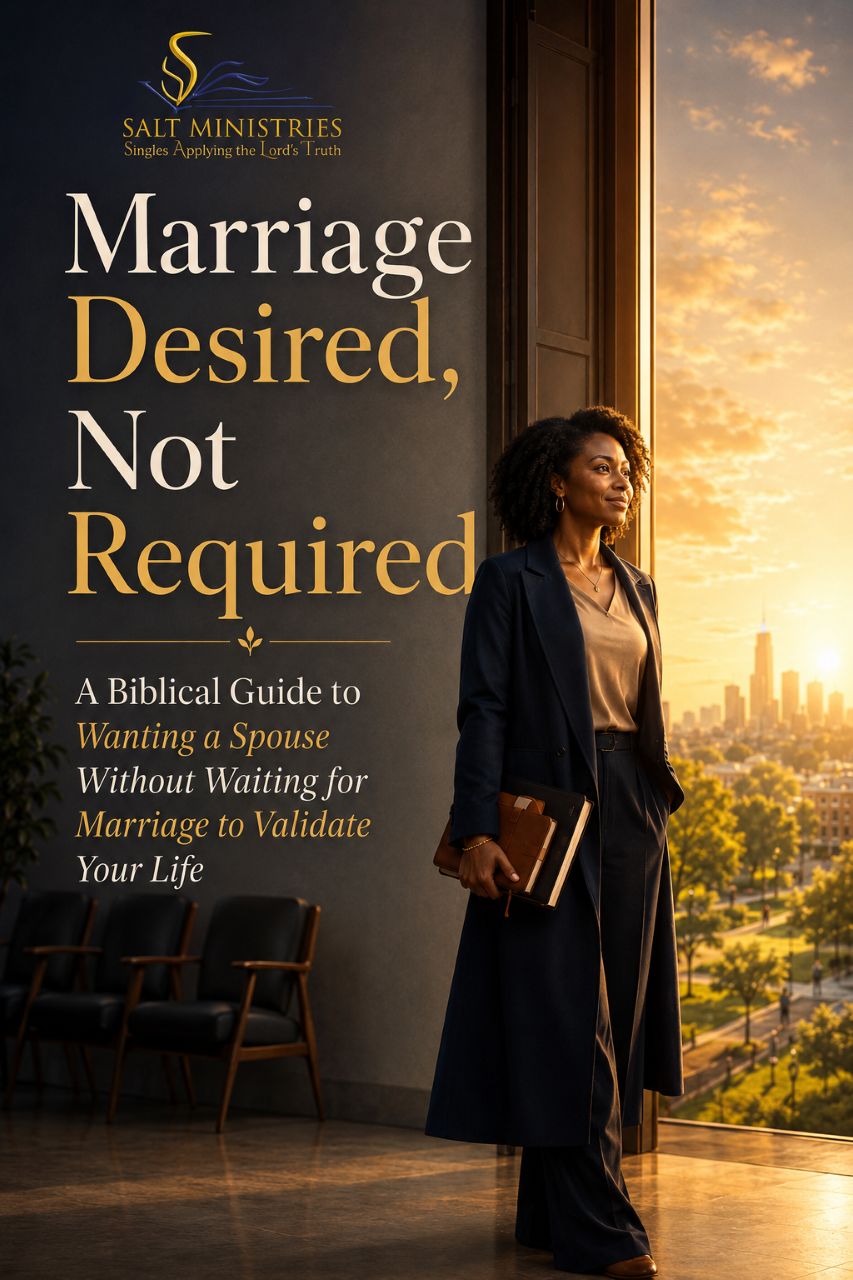 It’s called Marriage Desired, Not Required: A Biblical Guide to Wanting a Spouse Without Waiting for Marriage to Validate Your Life.
This is not another book telling you to stop wanting marriage.
And it doesn’t promise marriage will happen once you become content enough.
Instead, we open Scripture and examine the beliefs underneath the waiting.
Which beliefs came from the Bible?
Which ones may have come from Christian culture?
And how do you begin living differently even if your relationship status doesn’t immediately change?
And if this message put words to something you’ve been carrying, share this article with another Christian single who needs to hear it.